.svg)
.svg)

Amazon content is no longer created only for shoppers.
Increasingly, it is also being interpreted, summarized, and recommended by AI systems.
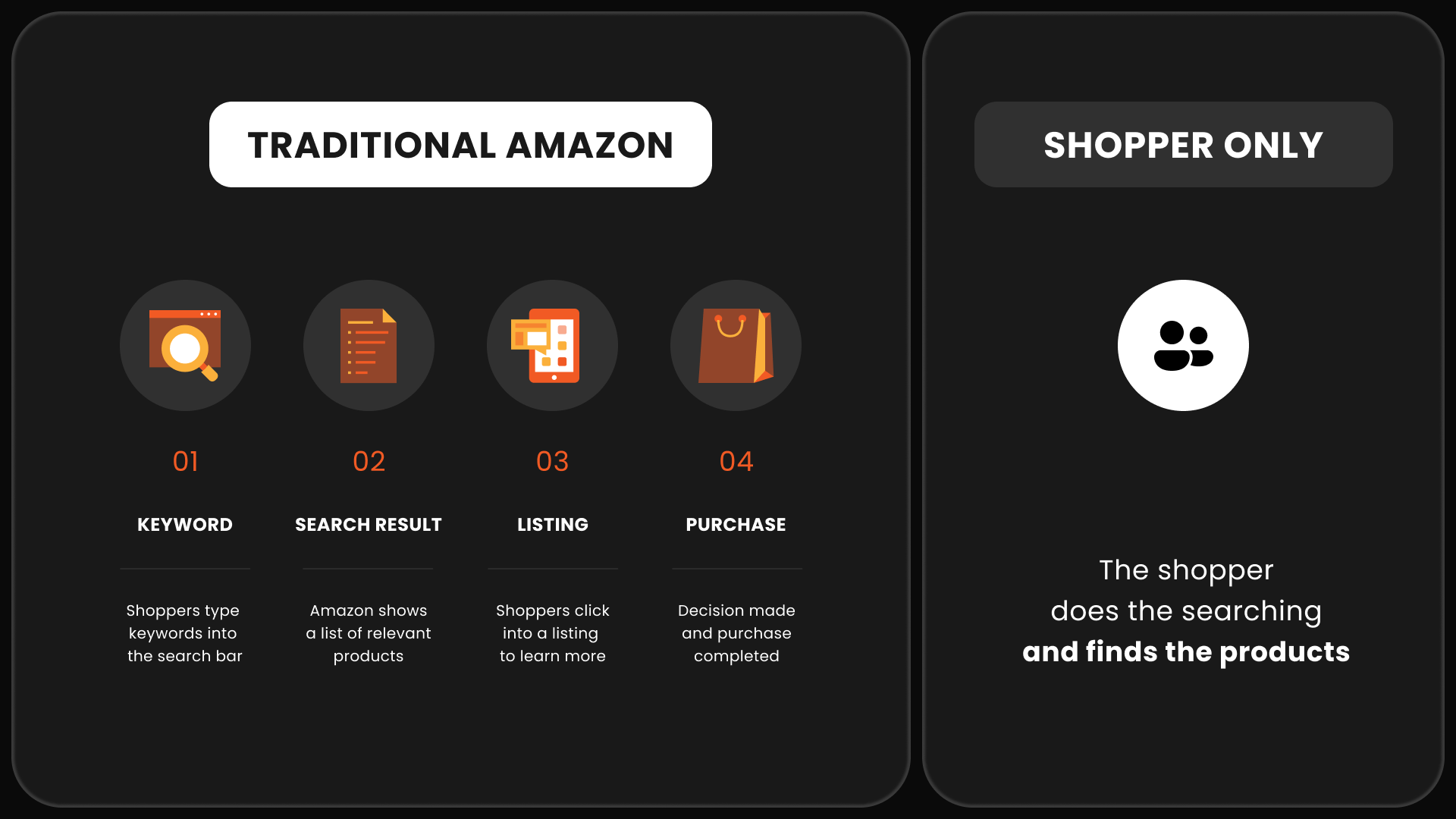
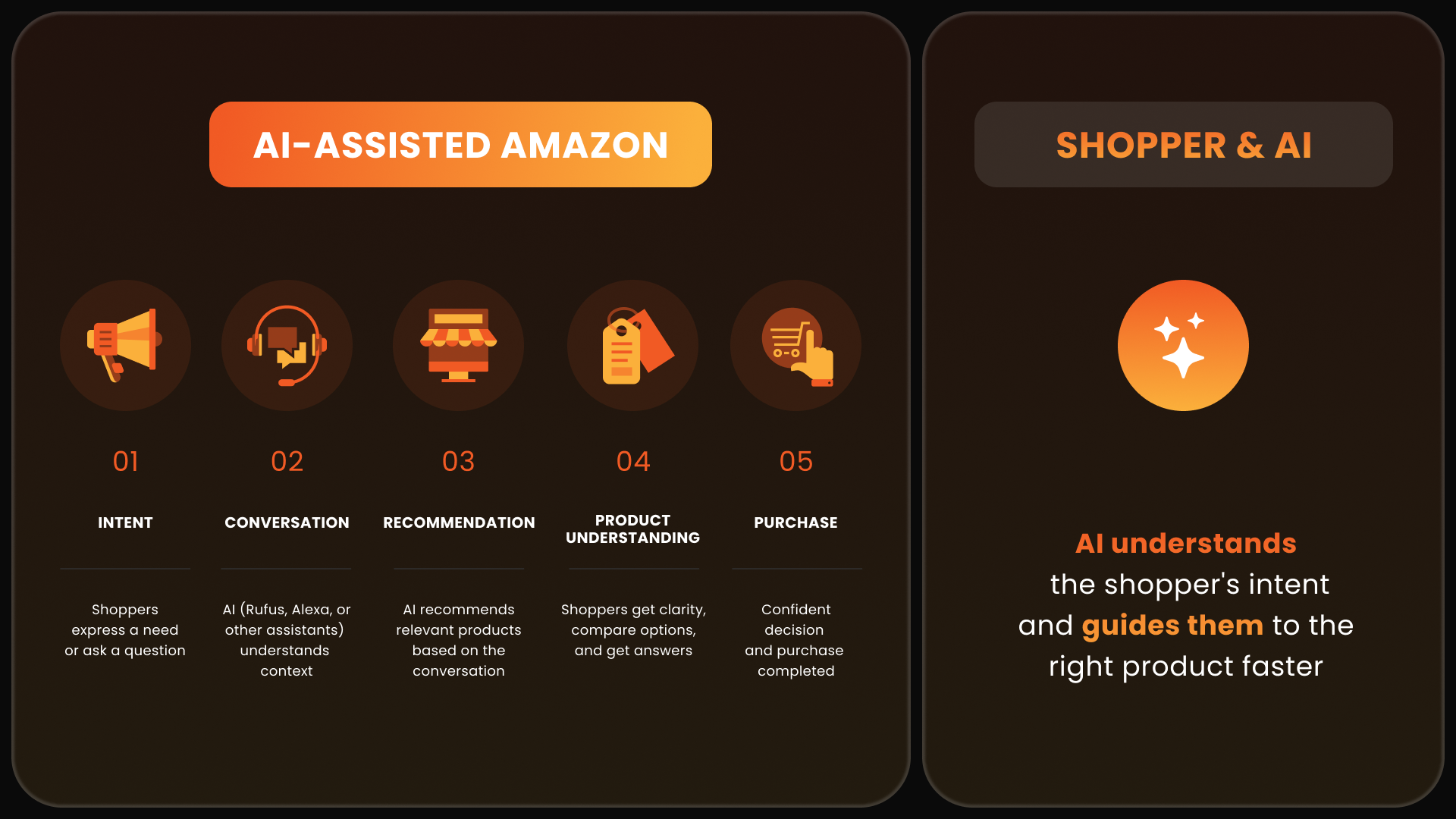
From AI-generated listings to conversational shopping assistants like Rufus and the new AI-powered Alexa shopping experience, Amazon is moving toward a marketplace where products are discovered through conversations, contextual questions, and AI-assisted recommendations — not only through traditional keyword search.
For Amazon sellers, this changes what “good content” means.Strong Amazon content now supports:
- product understanding
- semantic clarity
- buyer trust
- strategic positioning
- conversion-focused communication

Amazon’s shopping ecosystem is becoming more conversational
Instead of relying only on traditional search behavior, shoppers increasingly ask contextual questions like:
- “What’s best for small apartments?”
- “Which option is easiest to clean?”
- “What works best for sensitive skin?”
- “Which product is more durable?”
This shift is being accelerated by:
- Rufus
- Alexa Shopping
- conversational AI interfaces
- AI-powered recommendations
- contextual product discovery
Amazon listings are no longer competing only for clicks.They are competing to become the clearest answer inside AI-assisted shopping conversations.

AI Is Already Changing Amazon Content Creation
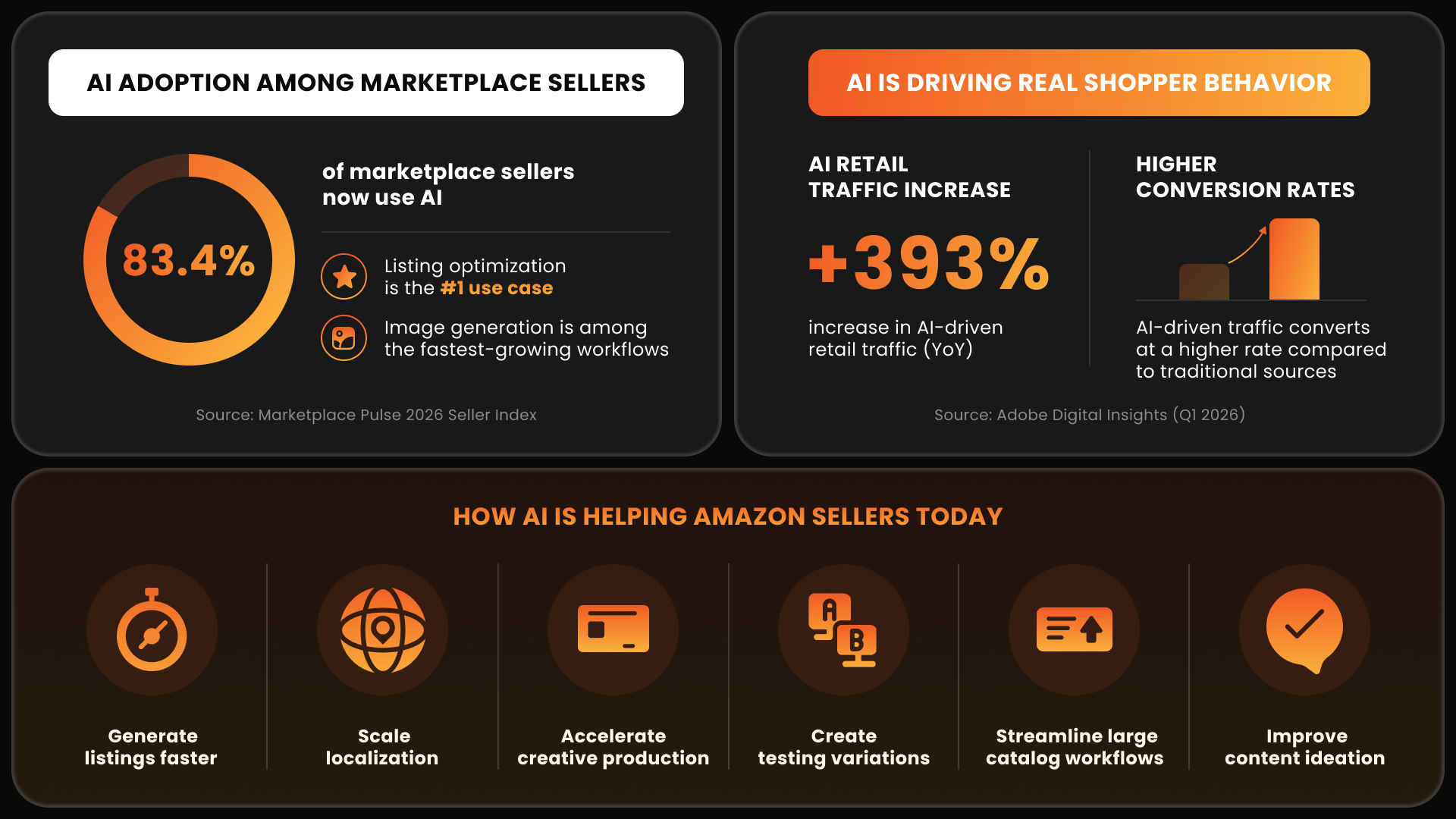
AI adoption among marketplace sellers is already widespread.According to the Marketplace Pulse 2026 Seller Index:
- 83.4% of marketplace sellers now use AI
- listing optimization is the #1 use case
- image generation is among the fastest-growing workflows
Consumer behavior is also shifting quickly.Adobe Digital Insights reported:
- a 393% increase in AI retail traffic in Q1 2026
- higher conversion rates from AI-driven traffic compared to traditional sources
Faster production does not automatically create stronger product communication.That is where strategy becomes critical.

The Biggest Problem With AI-Generated Amazon Content
As more sellers use similar tools and prompts, listings increasingly sound and look the same.The result is often:
- repetitive messaging
- weak differentiation
- generic product benefits
- shallow buyer understanding
- inconsistent visual hierarchy
- unclear value communication
This becomes especially dangerous on Amazon because shoppers make decisions extremely quickly.
Most customers scan listings instead of studying them.Within seconds, they are trying to understand:
- what the product is
- why it matters
- whether they trust it
- how it is different
- whether it solves their problem

If the listing fails to communicate those answers clearly, even well-written AI-generated content may not improve conversion performance.

How Amazon Sellers Should Actually Use AI
The strongest Amazon brands are learning how to combine AI efficiency with strategic execution.
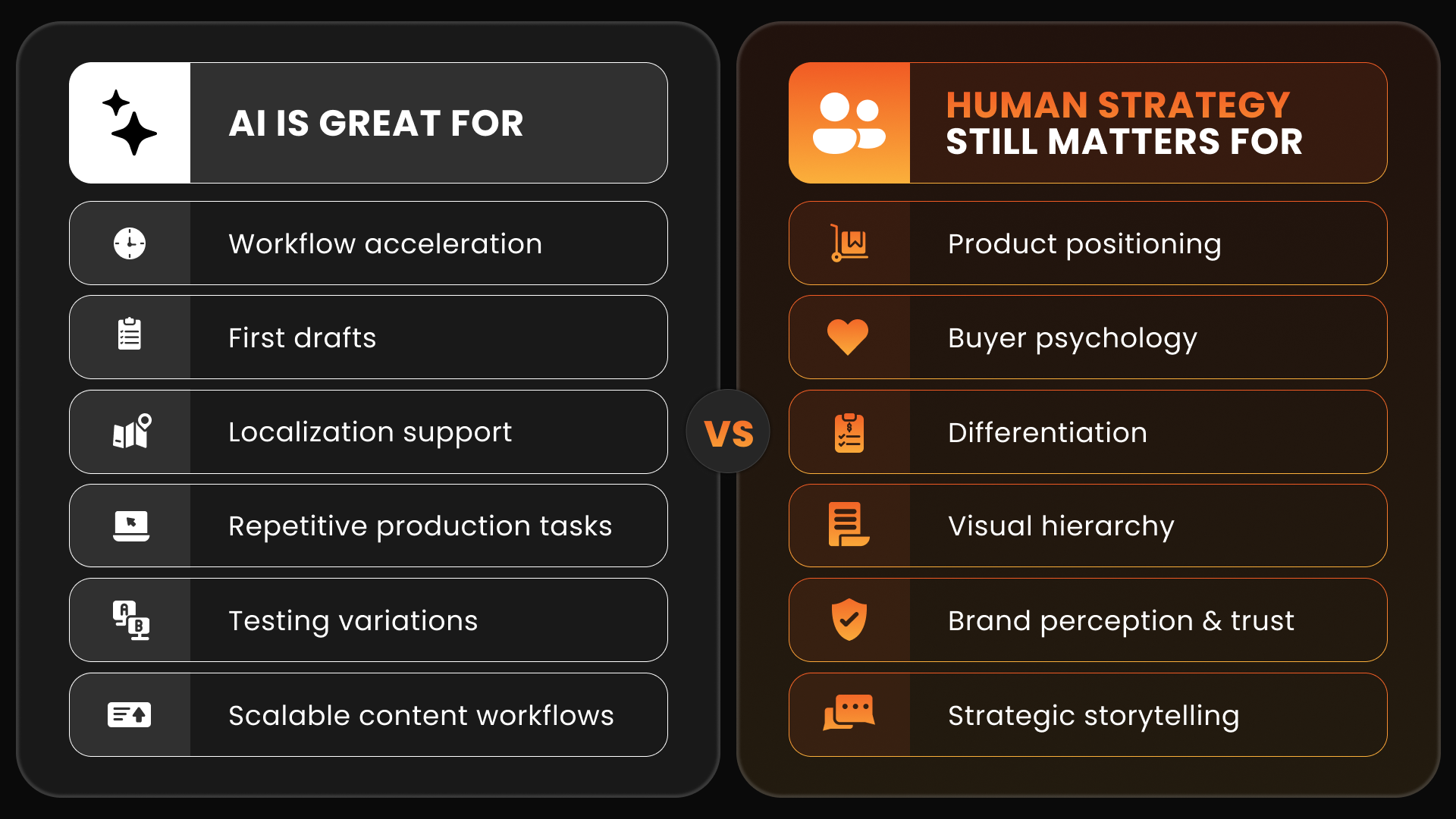
This distinction becomes more important as AI-generated content becomes more common across Amazon.
When everyone can produce content faster, strategic clarity becomes the competitive advantage.

AI Shopping Is Changing What “Optimization” Means
Amazon content is no longer optimized only for keyword visibility.It is increasingly optimized for:
- AI-assisted product understanding
- semantic clarity
- contextual answers
- structured product communication
Listings now benefit from:
- clearer product explanations
- complete product information
- buyer-focused FAQs
- consistent terminology
- logical image sequencing
- stronger A+ Content storytelling
- objection-focused communication
Amazon content is becoming more contextual, structured, and explanatory.
This is one of the biggest strategic shifts sellers need to adapt to in 2026.

Why Strategic Differentiation Matters More Than Ever
As AI lowers the barrier to content production, marketplace competition becomes more intense.
As generic AI content increases, strategic differentiation becomes more valuable.
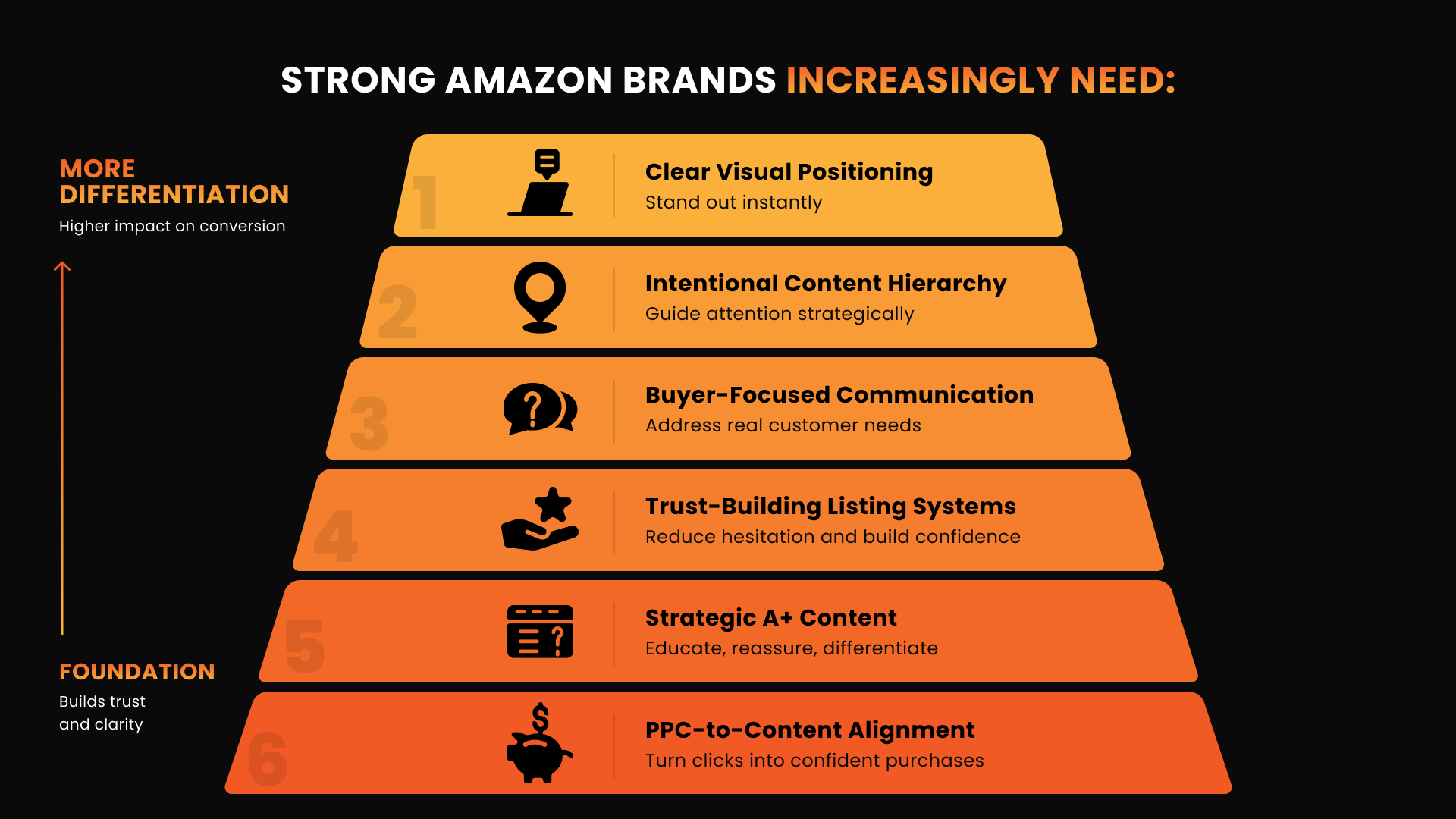
PPC may generate clicks, but content still determines whether shoppers understand, trust, and choose the product.
In AI-assisted shopping environments, clarity becomes a competitive advantage.

How DeSol Uses AI Strategically
At DeSol, we use AI to:
- accelerate workflows
- improve production efficiency
- support scalable content systems
- speed up ideation and iteration
- streamline marketplace content production
Every project is still guided by:
- strategic positioning
- buyer psychology
- conversion-focused communication
- marketplace expertise
- visual decision-making
- human refinement and quality control
Successful Amazon content helps shoppers quickly understand:
- why the product matters
- why it is different
- why it feels trustworthy
- why it deserves consideration over competing options
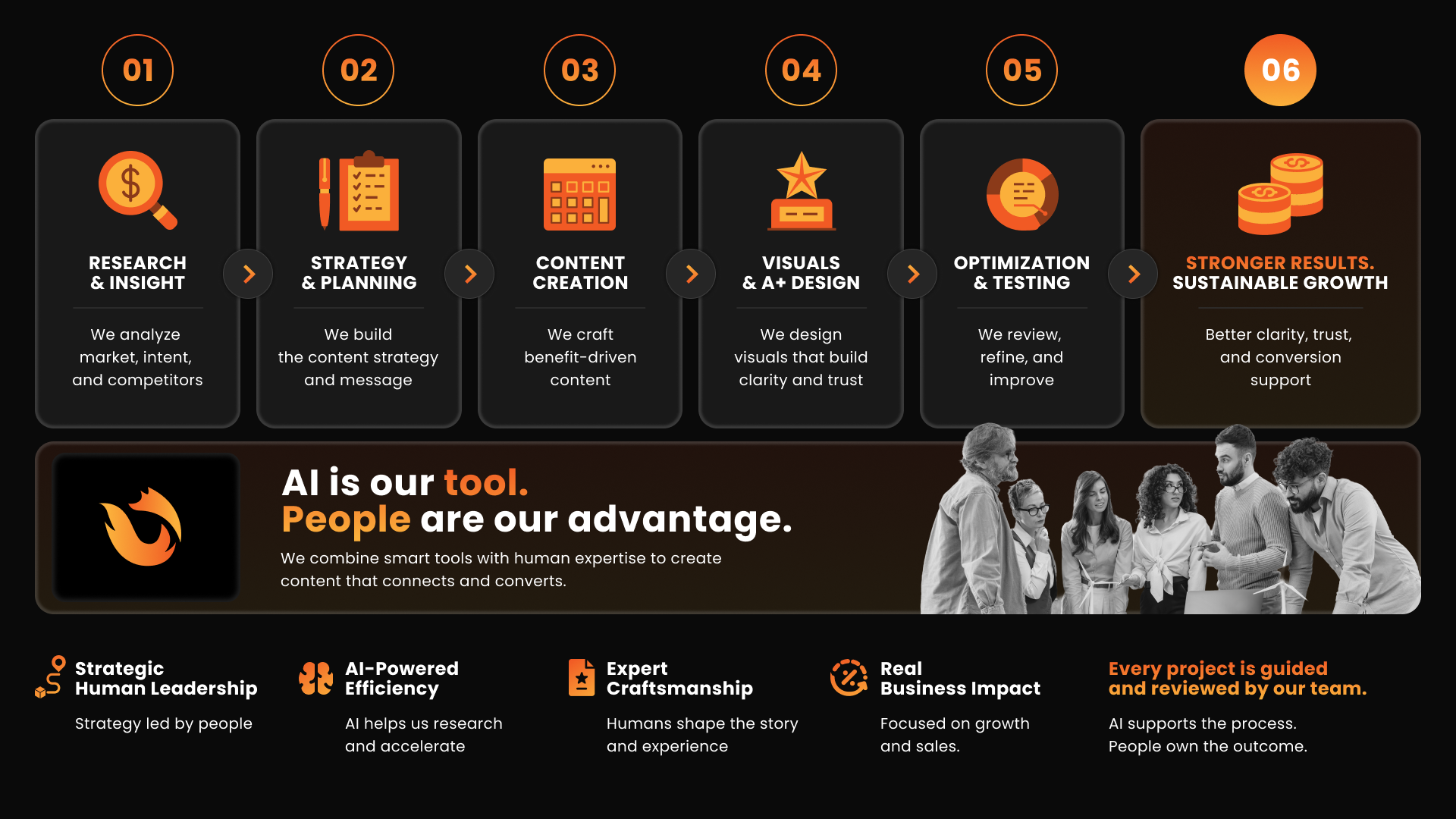
That level of strategic communication still requires human expertise. Especially in increasingly AI-driven marketplaces.
Conclusion
AI is changing how Amazon content is created, discovered, and interpreted.
The brands that stand out will not simply be the ones producing more content faster — they will be the ones building clearer, more strategic product communication systems.At DeSol, we use AI to accelerate workflows, improve production efficiency, and support scalable content creation — while keeping strategy, buyer psychology, and conversion-focused communication at the center of every project.
If you want to understand how your current Amazon content performs in today’s AI-driven marketplace environment, send us your details (product link or ASIN) for a strategic listing and visual content review.
Recommended reads
Explore our latest articles on digital marketing strategies.
Work With
Amazon Design Experts
Submit the form and we will get in touch to provide a free consultation.